Henry Flipper sought redress for decades after his Fort Davis court-martial
The first Black West Point graduate was acquitted of embezzlement but convicted on a separate charge. His later discharge correction and pardon came after his death.
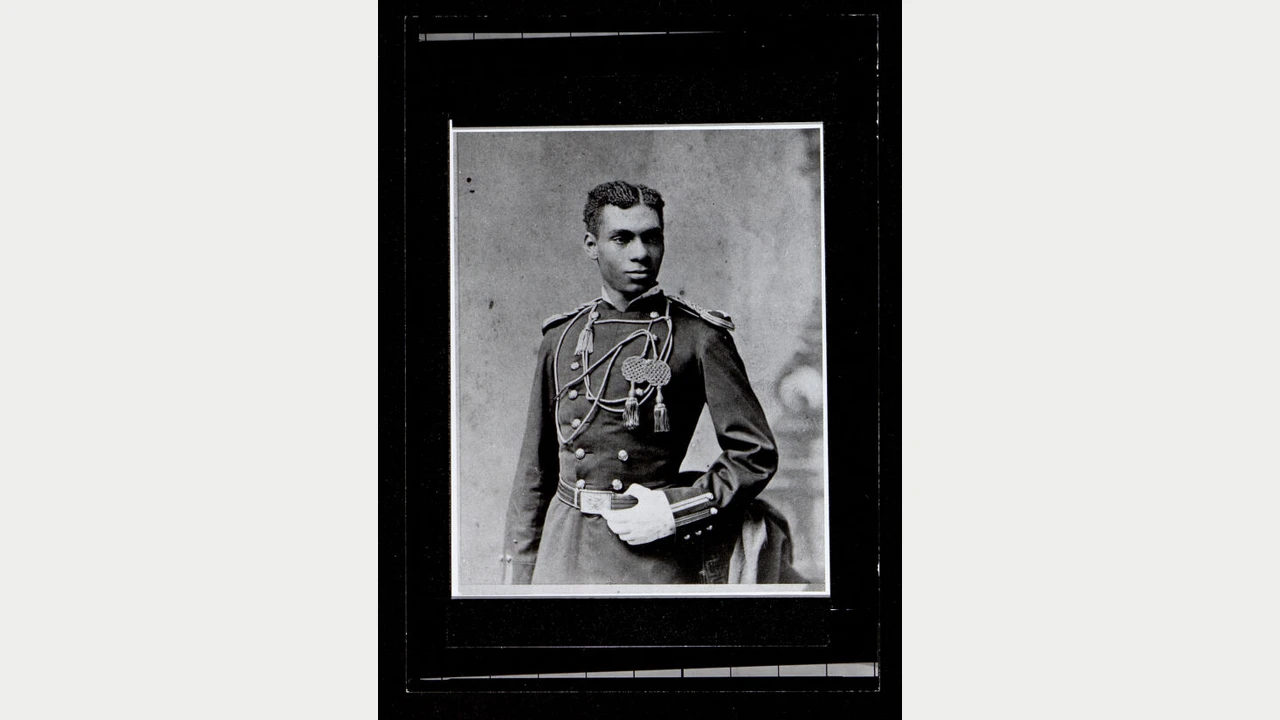
In October 1898, Henry Ossian Flipper sent a letter to the chairman of the House Committee on Military Affairs asking Congress to act on his military record. A bill would have restored his Army rank. The National Archives preserves the letter, part of a campaign that continued long after a court-martial at Fort Davis ended his service. [1]
Flipper had entered West Point in 1873 and graduated in 1877, becoming its first African American graduate. Assigned to the Tenth Cavalry, he served at several posts before arriving at Fort Davis in November 1880. There he took on quartermaster and commissary duties. The West Texas posting became the setting for the case he would contest for the rest of his life. [2]
In 1881, Flipper was accused of embezzling $3,791.77 in commissary funds. The court-martial found him not guilty of embezzlement. It nevertheless convicted him of conduct unbecoming an officer, a separate charge connected to false statements and financial records. The embezzlement accusation and the conduct conviction had different outcomes. [1][2]
The National Park Service's account says the conduct conviction carried dismissal under the regulations. The Army's judge advocate general recommended a punishment other than dismissal, but President Chester Arthur approved the sentence in 1882. The proceeding took place in the post chapel at Fort Davis, a specific site within a military career that also included engineering and surveying work.
Leaving the Army did not end Flipper's professional life. He established a civil-engineering office in Nogales, Arizona, and later worked for the Justice Department's Court of Private Land Claims, translating Spanish documents and surveying land grants. After work in Mexico, he moved to El Paso in 1912. Those jobs belonged to a substantial civilian career, even as he continued seeking a change in his Army status.
Congress did not grant the relief he sought. NPS traces the legislative attempts from 1898 through a final effort in 1924 and reports that the bills died in committee. Flipper died in 1940. He did not live to see either of the later decisions that changed his military record.
In 1976, the Army Board for Correction of Military Records reconsidered the dismissal. NPS reports that the board acknowledged his falsified reports and lies to his commander while concluding that the continuing dishonorable stigma was unduly harsh and unjust. It recommended correcting the records to show an honorable discharge dated June 30, 1882. The correction addressed the punishment and its lasting stigma; it was not a finding that every allegation was false. [2]
President Bill Clinton granted Flipper a full and unconditional pardon on February 19, 1999. The discharge correction and pardon were separate actions, both posthumous. The National Archives' exhibit still pairs the history of those eventual decisions with the earlier appeal to Congress. The exhibit identifies the appeal to Representative John A. T. Hull by its date: October 23, 1898. It remains a record of the relief Flipper sought during his lifetime.
Sources
- National Archives and Records AdministrationLt. Henry O. Flipper
- National Park Service, Fort Davis National Historic SiteSecond Lieutenant Henry Flipper