At Mission San Juan, an old irrigation channel still helps grow food
The San Antonio Food Bank uses water from the mission's acequia for a working farm, alongside a garden that demonstrates older growing methods.
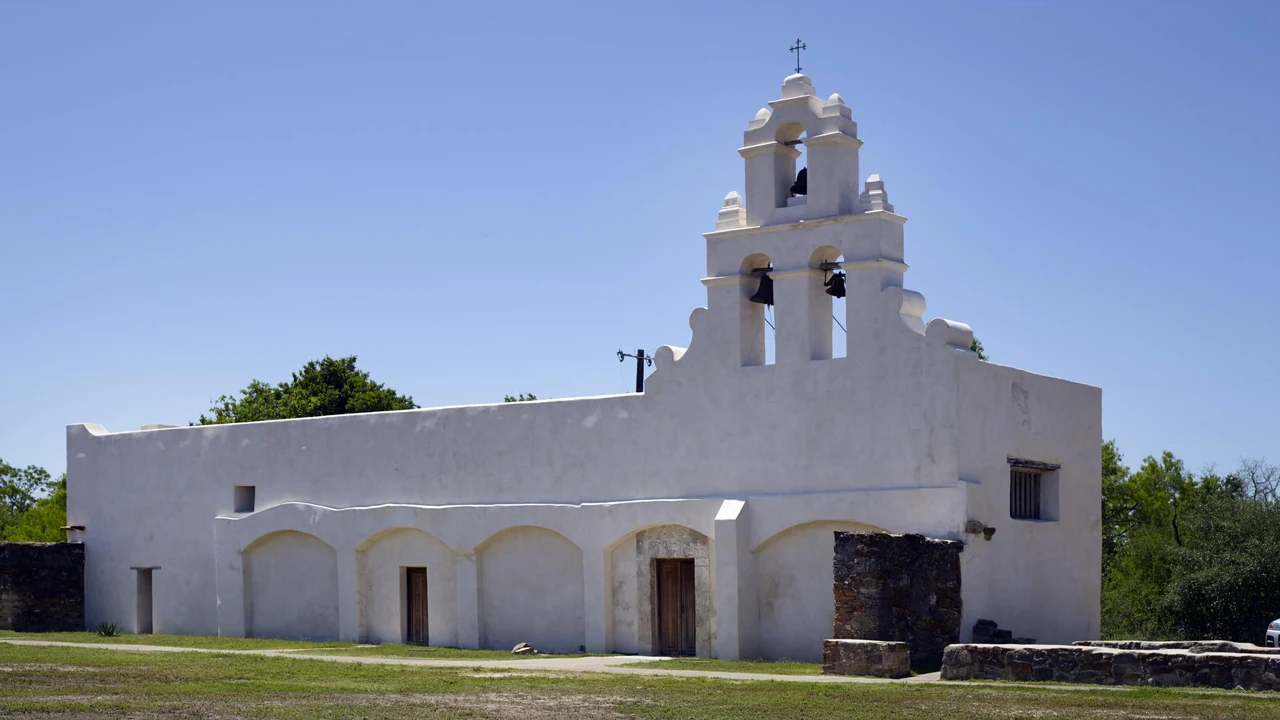
Water from the San Antonio River still reaches farmland at Mission San Juan through an acequia, an irrigation ditch with roots in the Spanish colonial mission system. The San Antonio Food Bank draws from that channel for its crops, connecting a historic water system to the practical work of growing food for the community. [1]
The Food Bank describes a partnership with the National Park Service covering 45 acres of farmland and another five acres devoted to a historic demonstration garden. Produce from the mission farm is distributed through Food Bank programs. The garden has a different but related job: helping visitors understand agricultural methods used by the mission's inhabitants. [2]
The Park Service explains that the Food Bank draws acequia water into modern irrigation systems. In the demonstration area, visitors can see how seeds were planted on raised berms and water traveled through furrows. The water source links the two approaches; the delivery methods need not be identical.
Food production helped determine where the missions could take root. According to the Park Service, mission sites were chosen for their capacity to farm and build irrigation ditches. Mission inhabitants began digging acequias before the stone churches and walls went up. Crops such as corn, beans, squash and peppers required a dependable way to move river water to the fields. [3]
The channels used the shape of the land. A diversion dam directed river water into a ditch, and a carefully chosen route allowed gravity to carry it toward farmland. Sluice gates controlled which rows received water.
The flowing channel also has a history of interruption and repair. In an archived account of the San Juan acequia's re-watering in September 2011, the Park Service said flood-control work had straightened the river and disconnected it from the irrigation system. That prevented water from reaching the mission farmland. The agency credited a partnership of preservation groups and public bodies with securing repairs. [4]
Calling the acequia old is accurate; suggesting it has operated without interruption would leave out the disconnection and the work needed to restore its use. The 2011 announcement also described plans for a demonstration farm. Those plans are historical evidence, not a substitute for the Food Bank's present account of the acreage it cultivates.
For visitors, the Park Service identifies a small demonstration farm and an acequia trail at Mission San Juan. Its description points to the gates, berms and furrows as things that make the irrigation process understandable. This is a place to look beyond the church and notice the land and water needed to sustain a settlement. [1]
The Food Bank describes the harvest as fresh fruits and vegetables for families facing food insecurity. The restored channel supplies water for that work as well as for teaching the history of the mission's fields. [2]
Sources
- National Park ServiceThe working farm, modern irrigation and historic demonstration area.
- San Antonio Food BankThe Food Bank's mission-farm partnership, acreage and produce distribution.
- National Park ServiceHow mission communities used gravity and gates to carry river water to crops.
- National Park ServiceThe historical interruption of irrigation and restoration announced in September 2011.