Palmito Ranch was a Confederate victory after Lee had surrendered
The final land battle of the Civil War unfolded near Brownsville in May 1865, while armed forces still faced one another along the Rio Grande.
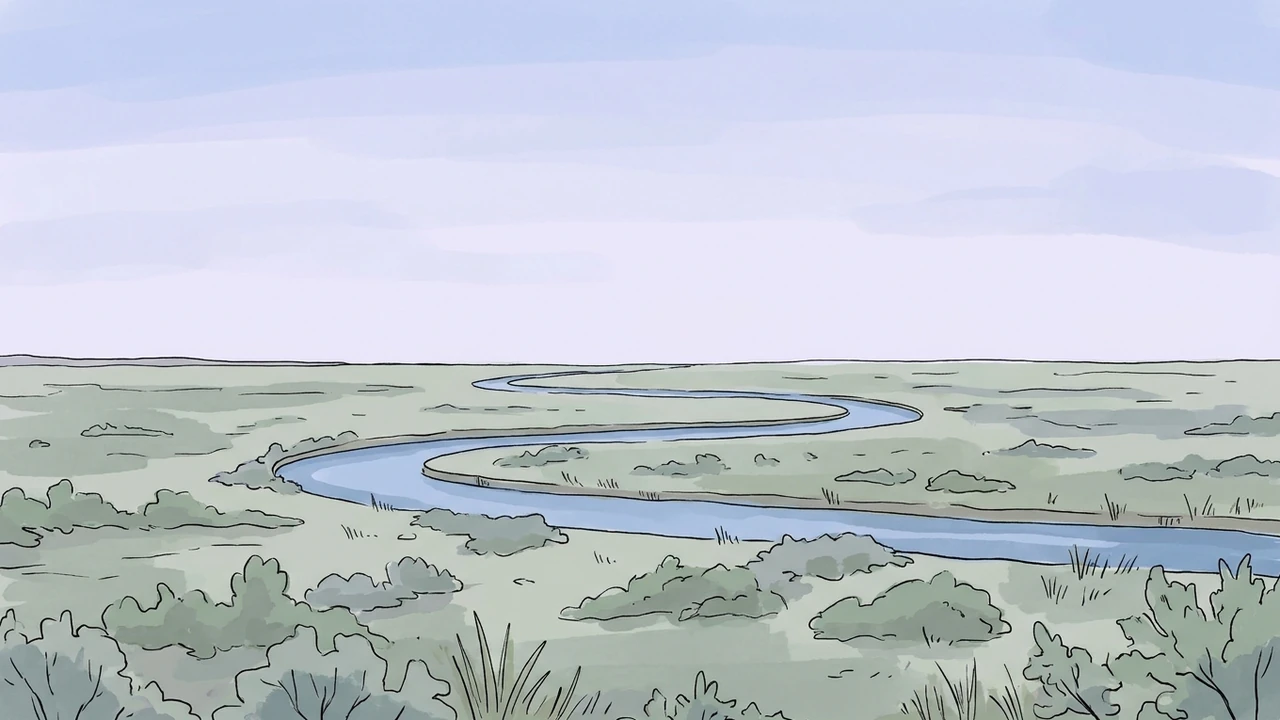
More than a month after Robert E. Lee surrendered his army, Union and Confederate troops were still positioned near the mouth of the Rio Grande. On May 12 and 13, 1865, they fought at Palmito Ranch, east of Brownsville. The Texas Historical Commission identifies it as the Civil War's final land battle, and its outcome was a Confederate victory. [1]
The sequence is easier to follow when Lee's surrender is understood as the surrender of the Army of Northern Virginia. It did not instantly remove the armies still stationed in Texas. The Texas Historical Commission's history places Confederate troops at Fort Brown and Union troops on Brazos Island to the east. Those opposing positions gave the fighting a local geography that an ending in Virginia could not immediately erase. [3]
According to the National Park Service's battle account, an informal agreement had kept the opposing forces on the Rio Grande from fighting since March. Union Col. Theodore H. Barrett nevertheless sent an expedition to the mainland on May 11 to attack reported Confederate outposts and camps. Lt. Col. David Branson led the initial force. The expedition included Black Union soldiers as well as troops from a Texas cavalry regiment. [2]
The first advance did not settle matters. Branson's troops attacked a camp at Palmito Ranch on May 12 and scattered its defenders, but a larger Confederate force later appeared. The Union troops pulled back to White's Ranch, and Branson requested help. Barrett reinforced him the next morning with men from the 34th Indiana Volunteer Infantry and took command of the enlarged force.
The renewed advance brought another confrontation. The Texas Historical Commission's account describes Confederate cavalry checking the Union movement until Col. John S. Ford arrived with reinforcements on the afternoon of May 13. Confederate artillery opened fire, cavalry attacked and part of the Union infantry was captured. Barrett ordered a retreat toward the Union position on Brazos Island. [3]
The National Park Service also records the range of people involved: Native, African and Hispanic Americans fought in the battle. Its account is more cautious about reports of firing from the Mexican shore and Imperial Mexican forces crossing the river. It calls those reports unproven. The international border belongs in the story, but those claims cannot be treated as established battlefield events. [2]
The site now interprets more than those two days. The historical commission says its panels address the Civil War in the Rio Grande Valley, a September 1864 battle as well as the May 1865 fighting, and efforts to preserve the battlefield. Nearby viewing platforms and markers provide ways to read the landscape's history without imagining that every part of the battle can still be seen on the ground. [1]
A visit requires practical preparation. The commission lists no public services or facilities at the site. It identifies interpretive locations near Palmito Hill Road and Boca Chica Highway and a battlefield and wildlife-refuge information broadcast on 1610 AM. Visitors should check access before traveling and plan for a roadside historic landscape, rather than assume the address leads to a staffed visitor center.
Sources
- Texas Historical CommissionBattle dates and outcome, site interpretation and visitor facilities.
- National Park ServiceThe Union expedition, fighting sequence and unproven reports involving the Mexican shore.
- Texas Historical CommissionFort Brown and Brazos Island positions, the Confederate counterattack and Union retreat.