Why a Texas bridge can ice before the road leading to it
Cold air reaches above and below an elevated road. In freezing weather, a clear-looking approach does not tell you what is on the bridge.
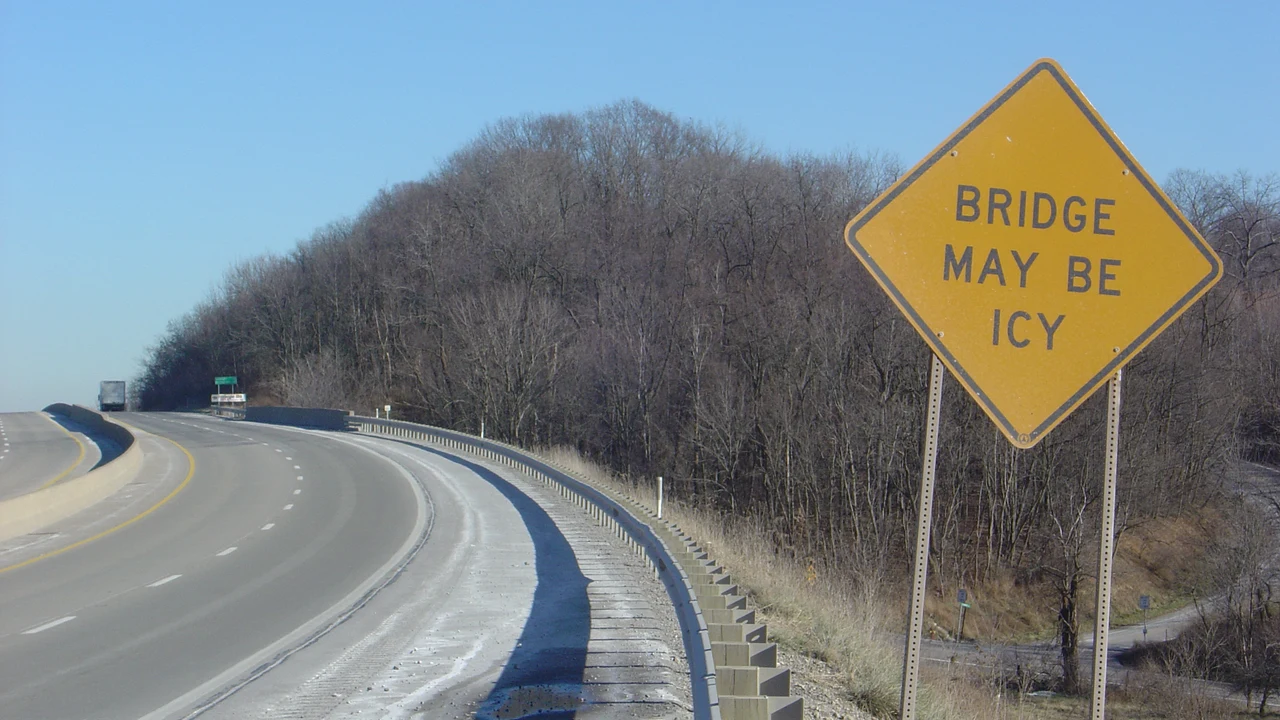

A bridge can become slippery before the road leading to it. The pavement may look much the same from the driver's seat, but the structure underneath is different. That difference is why a drive that seems uneventful can require extra caution at an overpass during freezing weather.
The National Weather Service explains that a bridge has open air beneath it. Cold air can surround the structure above and below, unlike pavement resting on the ground. That exposure helps explain why bridges can freeze before nearby road surfaces. A warning sign is a reminder of that vulnerability, not a report that a particular bridge is icy at this moment.[1]
The warning applies beyond bridges over rivers. Texas transportation officials specifically flag ramps, overpasses and shaded areas as places that tend to freeze first. An elevated connection on a highway can deserve the same attention as a bridge across water. Conditions on the approaching stretch of pavement do not establish the condition of the elevated section ahead.[2]
Ice also does not require a deep layer of snow. The Weather Service warns that rain or snowmelt can turn into black ice when freezing conditions arrive. Freezing drizzle can leave a thin layer that is hard to notice. A road that looks wet may be slick, and an overnight freeze can leave a problem that lasts into the morning commute.[3]
Temperature and moisture matter together. The concern is water freezing on the surface, not the bridge's height alone. The Weather Service notes that wet roads can freeze quickly at night or when temperatures fall rapidly behind a cold front. It also cautions that freezing is not uniform: a shaded part can be icy while a sunny part is not. One clear-looking section is a poor basis for judging an entire route.
For a Texas trip, the first decision is whether to go. The Texas Department of Transportation strongly advises staying off roads in dangerous winter weather. Before necessary travel, check the forecast and the state's road-condition information at DriveTexas.org or 800-452-9292. This is an evergreen explanation of the hazard, not a forecast or a finding that any road is open or safe today.
If travel is unavoidable, make changes before the bridge rather than waiting to react on it. The Weather Service advises slowing before crossing when a bridge may be frozen, because changing speed on ice is dangerous. TxDOT says posted speed limits reflect normal road and weather conditions, not winter conditions, and recommends at least three times the normal following distance on snow or ice.[1][2]
Leave cruise control off in wintry conditions, the Weather Service advises. Four-wheel drive is not a reason to dismiss the risk; the agency warns that even trucks and SUVs with it can lose traction in snow. Those precautions reduce neither the need to check conditions nor the value of delaying a trip when roads are hazardous.
When reviewing a route, notice its elevated ramps and bridges as well as the miles between them. The practical question is not simply whether the main road looks clear, but whether freezing weather could make the next exposed section behave differently.
Sources
- National Weather ServiceWhy exposed bridges can freeze first and why slowing beforehand matters.
- Texas Department of TransportationTexas road-condition contacts and precautions for bridges, ramps and overpasses.
- National Weather ServiceBlack ice, freezing drizzle, rapid freezes and winter driving precautions.