Flood insurance for the house may leave your belongings uncovered
Texas homeowners and renters should ask two separate coverage questions, then check deductibles, exclusions and the policy's actual start date.
A flood-insurance conversation should name both the building and the belongings inside it. Under the National Flood Insurance Program, those are distinct kinds of coverage, typically purchased separately with separate deductibles. Having protection for walls and wiring does not establish that the furniture, clothes and electronics are insured too. [1]
For Texas households, the earlier question is whether there is a flood policy at all. The Texas Department of Insurance warns that most homeowners policies do not cover storm-related flooding. Its renter guidance says renters policies typically do not pay for flood losses either. Ask the insurer what policy covers the particular risk, rather than treating every kind of water damage as the same insurance problem. [2][3]
The federal program's residential limits help frame that discussion: up to $250,000 for a home's building and up to $100,000 for contents. Renters can buy contents coverage for their own belongings. These are maximum available coverage amounts, not an assurance that a household purchased those limits or that every damaged item will be reimbursed in full. Check the declarations page and the policy itself.
NFIP's building list includes electrical and plumbing systems, furnaces, water heaters and built-in appliances. Its contents list includes clothing, furniture, electronics, washers and dryers. That makes a room-by-room inventory useful when asking an agent what coverage is missing. A list of appliances alone will not tell you which side of the policy applies.
A separate question concerns the bills that continue while a home cannot be used. NFIP's coverage guidance excludes additional living expenses such as temporary housing, along with most self-propelled vehicles and various kinds of outdoor property. A flood policy therefore should not be treated as a general recovery fund for every expense after a storm. Ask explicitly about the costs your household would struggle to pay. [4]
Timing matters before the loss. NFIP generally has a 30-day waiting period, but its buying guide lists exceptions, including certain mortgage transactions and qualifying map changes. Do not apply the general rule as though there are no exceptions, or assume that an exception covers your situation. Have the agent identify the actual effective date and explain any applicable conditions.
The policy also has its own definition of flooding. FEMA's guidance says sewer-backup damage is covered by flood insurance only when it directly results from flooding. A clogged pipe is not interchangeable with water inundating a neighborhood. Describing where the water would come from is more useful than asking whether a policy covers water. [1]
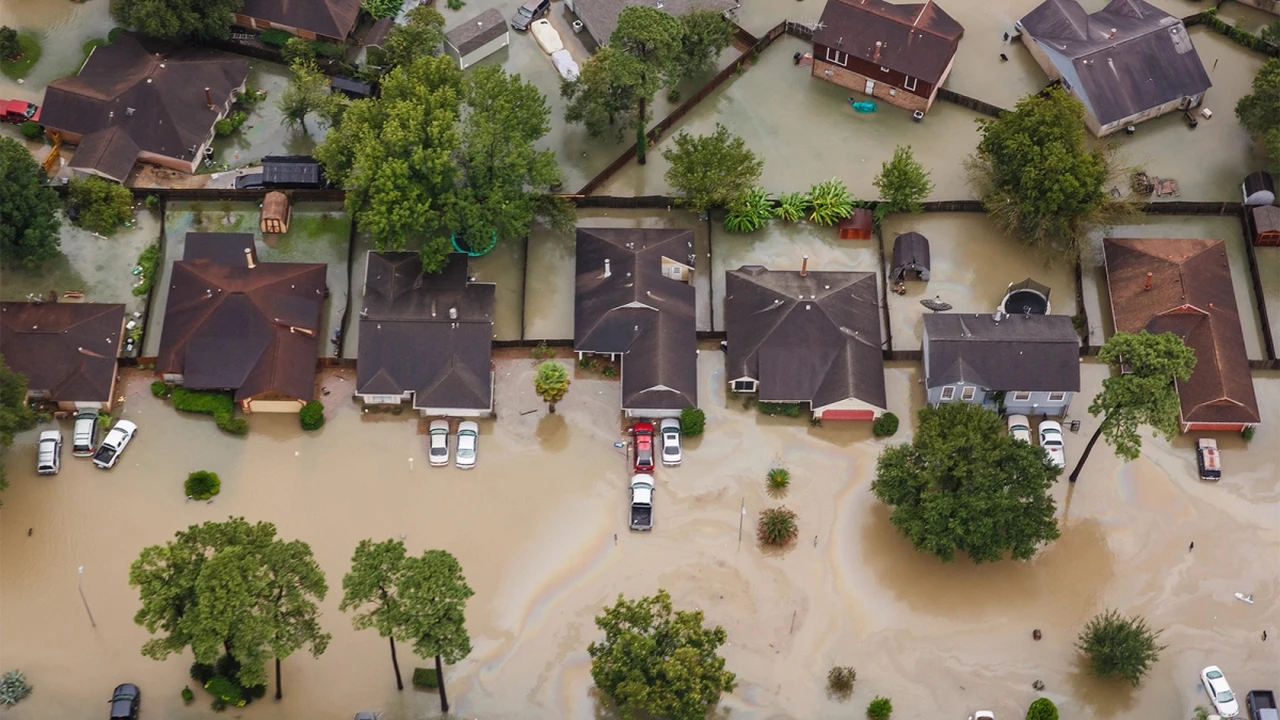
The accompanying U.S. Geological Survey photograph records Houston flooding during Hurricane Harvey in 2017. It shows a past Texas flood, not a present emergency or evidence of any pictured household's insurance coverage. [5]
Before buying or renewing, ask the agent to put four answers together: what is insured, the limits for each coverage, the separate deductibles and when protection begins. TDI directs consumers to ask their existing home or renters insurer about flood coverage, or look to NFIP. Comparing those answers with your own inventory is a more useful next step than assuming the existence of one policy settles the whole question.
Sources
- FEMA / National Flood Insurance ProgramWhat you need to know about buying flood insurance
- Texas Department of InsuranceWhy you should consider a flood insurance policy
- Texas Department of InsuranceDo you need flood insurance as a renter?
- FEMA / NFIP AgentsTypes of Flood Insurance Coverage
- U.S. Geological SurveyHouston Harvey Flood