Your Texas home policy can cover the roof differently from the rest of the house
Replacement cost on a policy does not necessarily mean a roof claim will pay for a new roof without depreciation.
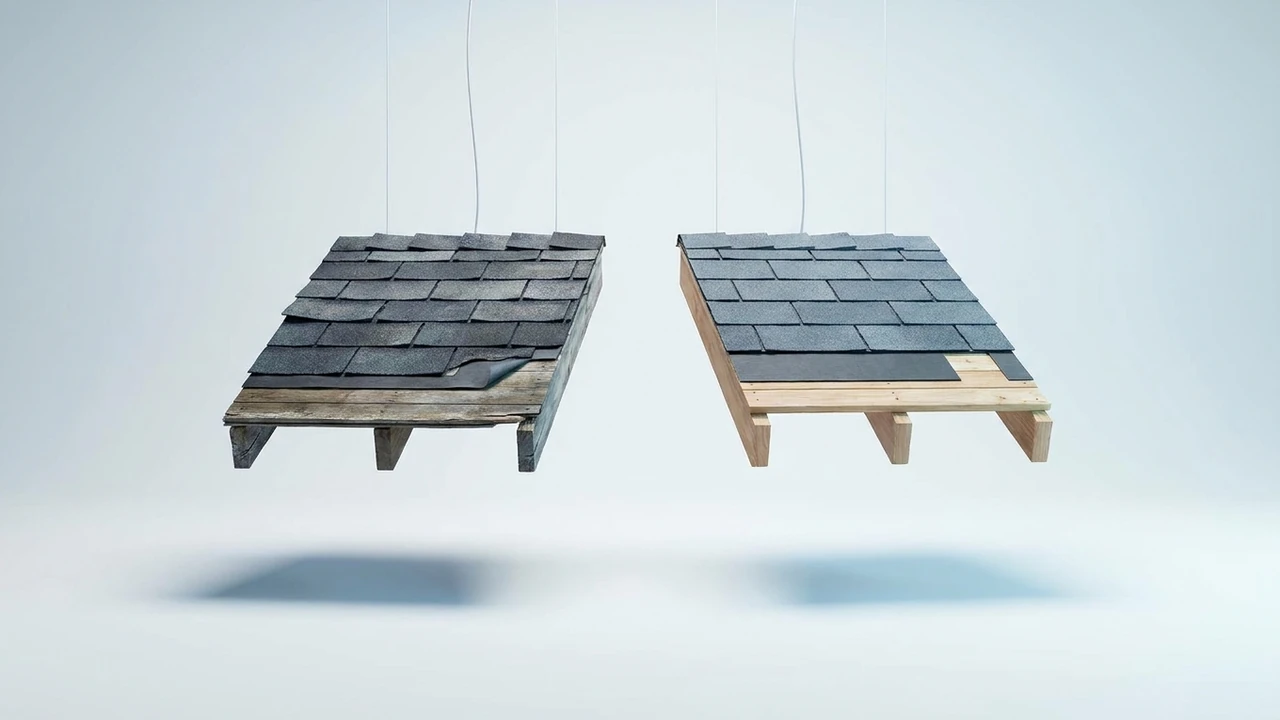
A Texas homeowner can buy replacement-cost coverage and still have a roof claim settled at a lower, depreciated value. The state's Office of Public Insurance Counsel specifically lists roofs among the types of property that may be paid at actual cash value even when a policy includes replacement-cost coverage. That makes the roof's own terms worth checking before a storm. [1]
The difference begins with what the insurer is valuing. Replacement cost is the amount needed to repair or replace the property. Actual cash value subtracts depreciation, which reflects factors such as age and wear. A deductible is a separate amount the homeowner must bear. These are different parts of the claim, and understanding one does not settle the others.
For an older roof, the distinction can leave a substantial gap between what the insurer pays and what replacement work costs. The Texas Department of Insurance illustrates that gap in its home insurance guide: an actual-cash-value settlement accounts for the old roof's depreciation, while the contractor must still provide a replacement at current prices. The homeowner is responsible for the part the policy does not pay. [2]
That does not make every replacement-cost claim an immediate payment for the full job. OPIC says most companies initially pay only part of the replacement cost. The policyholder must prove that the home was repaired, or the relevant property replaced or fixed, before receiving the rest. A first check can therefore be smaller than the eventual covered payment without necessarily meaning the policy provides only actual cash value.
The practical question is whether an amount has been withheld pending proof of repairs or deducted under the roof's actual-cash-value coverage. Ask the insurer to identify which applies and explain the required documentation. Before relying on a later payment to finish the job, ask what work must be completed and what terms govern that payment. The general name of the policy cannot answer those questions for an individual claim. [1]
There is a separate timing problem at the beginning of repairs. TDI advises homeowners to document damage with photographs or video if possible and make temporary repairs to protect the house and belongings. Its guide warns that permanent repairs before the insurer sees the damage could lead to a denied claim. Preventing further damage and replacing the entire roof are not the same step. [2]
For someone shopping for coverage, this leaves a more useful conversation than simply asking whether the policy offers replacement cost. Ask how the roof itself is covered, how depreciation would affect a covered loss and what deductible applies. For someone already holding a claim check, ask which part of the settlement it represents and what would be needed for any remaining payment.
Keep the policy, the insurer's damage estimate and the repair proposal together when comparing those answers. Ask the insurer to explain any gap and the conditions for a remaining payment before committing to work based on an expected claim check.
Sources
- Office of Public Insurance CounselReplacement cost, actual cash value, roof exceptions and partial claim payments.
- Texas Department of InsuranceHome insurance coverage, deductibles, repair precautions and claim payments.