For whooping cranes, the Texas coast is a winter feeding ground
Blue crabs, clams and berries connect the birds' winter lives to coastal marshes. Their movements also show why one habitat cannot tell the whole story.
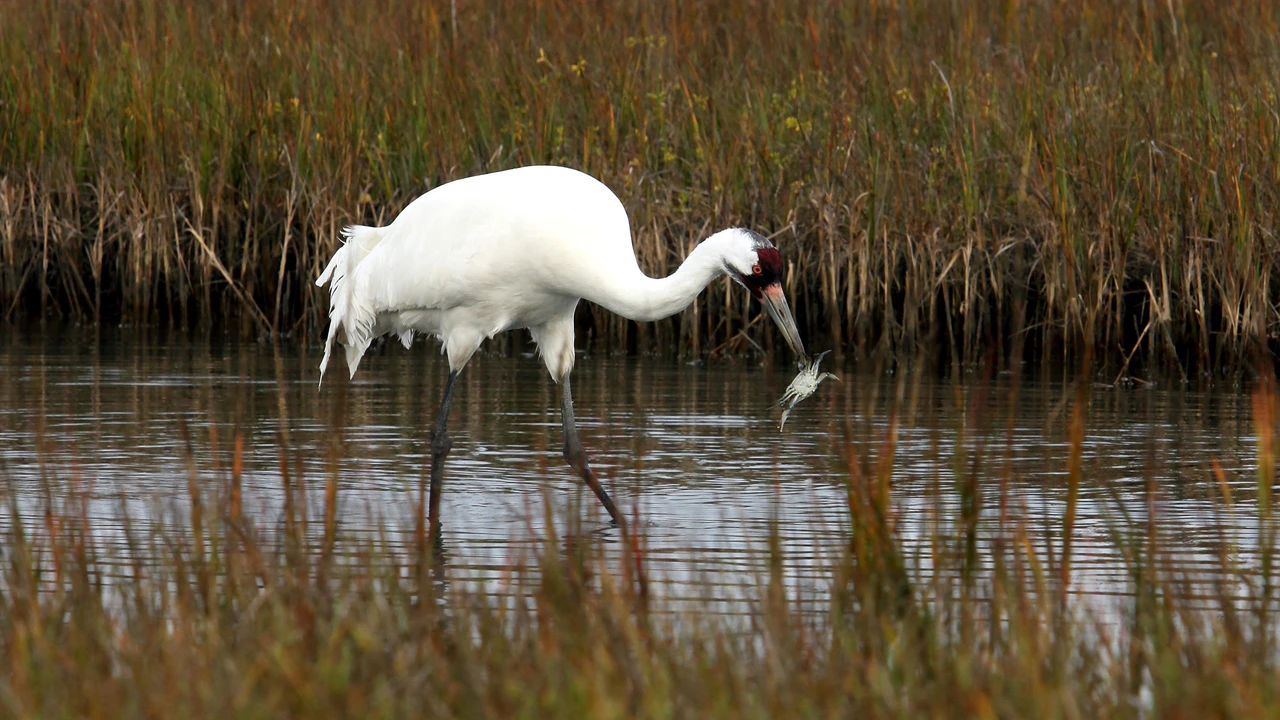
A whooping crane's winter meal on the Texas coast can include a blue crab, a clam or the fruit of a Carolina wolfberry shrub. The U.S. Fish and Wildlife Service identifies those foods as main parts of the bird's winter diet, with wolfberries especially important in fall. That menu helps explain the value of a stretch of shallow water and marsh that might look unremarkable from the road.[1]
The Aransas-Wood Buffalo population travels between breeding grounds in and around Canada's Wood Buffalo National Park and wintering habitat on the Texas coast. At Aransas, salt marshes and tidal flats provide places to forage. The bird's familiar white outline belongs within that feeding landscape, where protecting habitat also means protecting access to food.
Blue crabs are one connection between the cranes and water arriving from farther inland. The federal species account identifies reduced freshwater inflows and associated declines in blue crabs among the threats documented for whooping cranes. That does not make any single crab shortage a complete explanation of the birds' fortunes. It does mean that the condition of coastal feeding grounds cannot be considered separately from the water reaching them.
The cranes' needs also change during the year. The same federal account lists insects, frogs, rodents, minnows, small birds and berries among summer foods. Their habitat ranges from coastal marshes to inland wetlands, open ponds and agricultural fields. Texas is an important part of a much longer journey, with feeding and resting places needed along the way.
Young birds make their first winter with their parents. Texas Parks and Wildlife describes chicks beginning with rusty-colored feathers, then gaining white plumage as they grow. A family group can therefore include birds that look noticeably different from the white adults. The young stay with their parents through that first winter and separate when spring migration begins.[2]
Even the familiar seasonal route has exceptions. In an April 2026 account, the Fish and Wildlife Service reported that eight whooping cranes had spent the preceding winter at Oklahoma's Salt Plains National Wildlife Refuge rather than continuing to coastal Texas. The group included six adults and two juveniles. Biologists and community observers followed them through the winter before they headed north in early March.[3]
That report also described cranes using habitat beyond their core Texas wintering grounds, including sites farther inland. At Aransas, biologists have observed cranes foraging after prescribed burns for foods such as acorns. These observations broaden the picture of what the birds use; they do not establish where any particular crane will spend the next winter.
For people hoping to watch them, leaving the birds room to feed is part of the visit. The Fish and Wildlife Service's account asks observers not to approach whooping cranes or leave a vehicle to approach them, and to stay at least a quarter mile away. Sightings can be useful to researchers, but the agency directs people to the appropriate state wildlife department or local federal wildlife office for reporting instructions.
Sources
- U.S. Fish and Wildlife ServiceDescribes the species' seasonal foods, habitats, migration and threats involving freshwater inflows and coastal prey.
- Texas Parks and Wildlife DepartmentDescribes juvenile plumage, first-winter family groups and Texas coastal winter habitat.
- U.S. Fish and Wildlife ServiceReports the 2025-2026 Salt Plains wintering group, wider habitat use, post-burn feeding at Aransas and observer-distance guidance.